

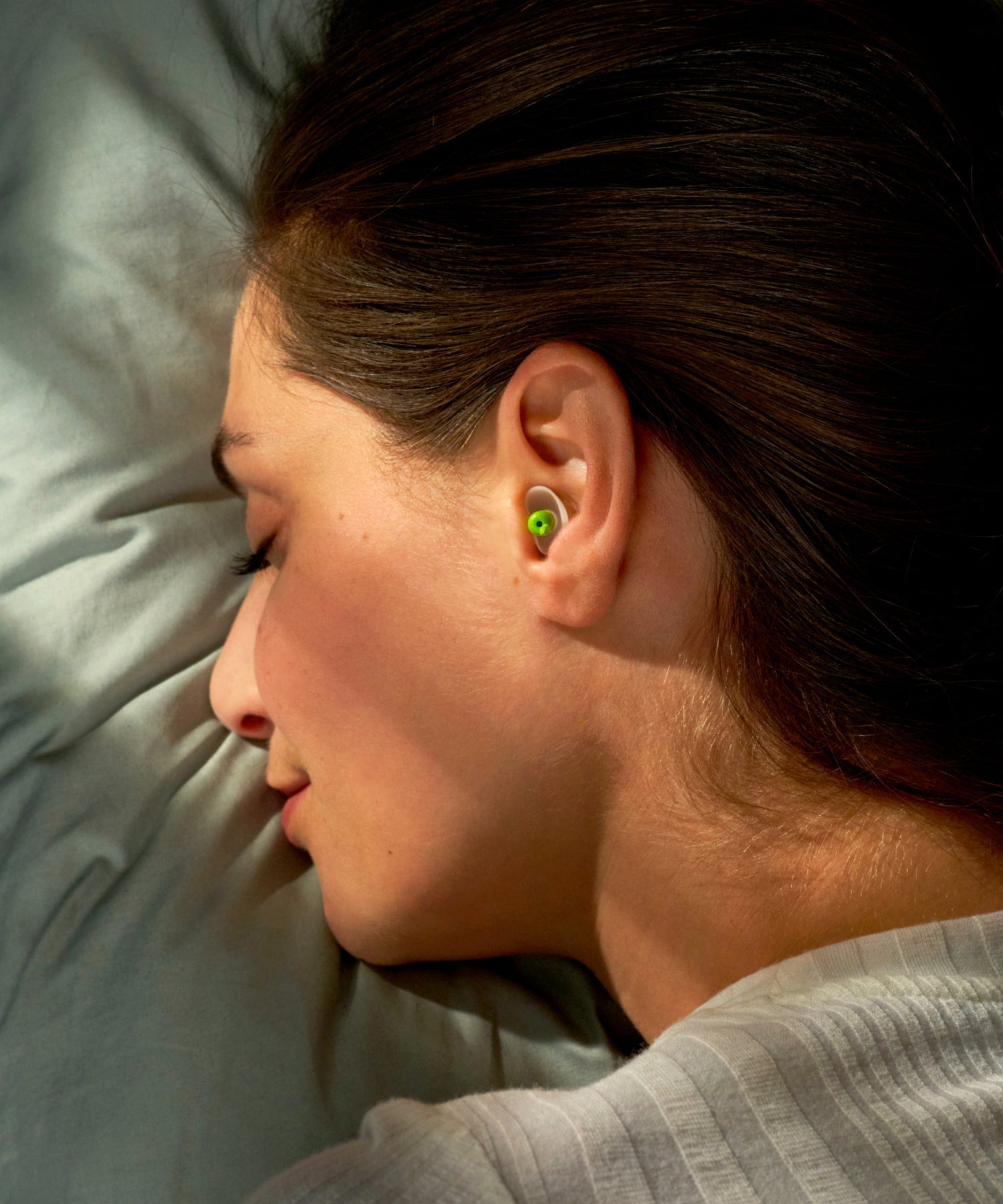
Sleeping on your side is common for many people. Yet some side sleepers wake up often or toss and turn more than they would like. This can relate to comfort, support, and the overall sleep environment. Think about your neck and shoulders, but also pressure on your ear and the sounds around you. In this article, we share practical considerations that may help side sleepers rest more comfortably.
Why Your Sleep Position Can Matter
Your sleep position may affect comfort and recovery
Good sleep plays an important role in everyday recovery and wellbeing. When you sleep on your side, more body weight rests on one side. This may make your shoulders, hips, and neck feel more sensitive. It can also create pressure on your ear, which may feel uncomfortable.
The connection between sleep position and sleep quality
As a side sleeper, your ear often rests against the pillow. This can change how sounds reach you. Some sounds may seem quieter, while others may stand out more. For some people, that can lead to lighter sleep. A quieter sleep environment may help, and some people choose earplugs as part of their bedtime routine.
General advice about sleep position is often too simple
Much sleep advice stays general, such as sleep on your side or avoid stomach sleeping. These tips can be useful, but they do not always reflect personal differences. Height, weight, shoulder width, mattress, pillow, and individual sensitivities can all play a role. Useful sleep advice is not only about position, but also about support and the broader sleep environment. What feels comfortable can vary from person to person.
Common Sleep Positions and What They May Mean for Comfort
Side sleeping
When your body is well supported, side sleeping may help many people maintain a more neutral spine position. For some people, this can feel comfortable for the back and neck. Side sleeping is also often discussed in relation to snoring, because some people find breathing feels easier than when sleeping on the back. Some people also find side sleeping, especially on the left side, more comfortable after a meal. During pregnancy, side sleeping is often discussed as a common option, but personal medical advice is important.
Back sleeping
Back sleeping can feel comfortable when your body is evenly supported. Your weight is spread across a larger surface, which may reduce pressure on some joints. With appropriate support under your head and lower back, this position may feel relaxing for some people. For others, back sleeping may be linked with more snoring or less comfortable breathing.
Stomach sleeping
Stomach sleeping feels familiar to some people, but it can be harder to support your body well in this position. Your neck usually turns to one side for a longer period, and your lower back may also feel more strained. Because of this, some people report morning stiffness or discomfort. If this position feels less comfortable for you, it may help to explore another position gradually.

How Sleep Accessories May Support Your Sleep Position
Pressure points can interrupt sleep
When side sleeping, a lot of weight rests on the shoulder, hip, and the ear against the pillow. As long as these areas feel well supported, you may barely notice them. When pressure is less evenly distributed, discomfort can develop. A shoulder can become sensitive, a hip can feel irritated, and the ear can feel restless as well. Even light pressure may interrupt sleep for some people.
The role of sleep accessories
Earplugs and sleep masks are not always comfortable for every sleep position. In some cases, they can press against the pillow or create irritation. Especially with side sleeping, it helps to choose accessories that fit well and do not add extra pressure. Alpine offers sleep earplug options, and the right fit may matter when comfort is a priority.
How discomfort can affect your sleep position
When a sleep position feels uncomfortable, your body often reacts automatically. You may turn more often or shift into a position that feels easier in the moment. That can interrupt sleep. Reducing sources of pressure or irritation, including with softer or better fitting accessories, may make it easier to stay in a comfortable position.
How to Identify Your Natural Sleep Position
A simple self assessment
Want to know your natural sleep position? Do not only look at how you fall asleep, but also at how you wake up. If you usually wake up on your side, with one knee slightly bent, side sleeping may be your dominant position. You can also ask yourself which position feels most relaxed without constant adjustment. Tip: pay attention to this for a few nights.
Why forcing a position rarely works
Forcing a sleep position often backfires. When your body feels tension or discomfort, you may turn more often, sleep more lightly, or wake up during the night. Adjusting is different from forcing. Small forms of support, such as an appropriate pillow or accessories that do not interfere with your position, may help your body settle into a comfortable position more naturally.
Making a gradual adjustment
Sometimes it makes sense to gently change your sleep position, for example if stomach sleeping feels less comfortable for you. Moving toward side sleeping often works best step by step. Start with light support, such as a pillow between your knees, and give your body time to adjust. It is better to see this as a gradual process centered on comfort and rest, not a quick fix.
Supporting Your Sleep Position
Pillows, mattresses, and basic support
Good support starts with the basics. Side sleepers often prefer a pillow that fills the space between the shoulder and head, so the neck can stay in a more natural position. Back sleepers may prefer even support under the head and lower back. Your mattress also matters. It should suit your body and preferred sleep position.
What to look for in sleep accessories
Not all sleep accessories are designed with a specific sleep position in mind. For side sleeping especially, shape makes a real difference. Oval and pressure relieving designs may help distribute pressure more evenly and reduce pinching around the ear or head. One example is Alpine SleepDeep. These sleep earplugs were developed with side sleepers in mind and feature a soft, oval shape designed to feel comfortable in the ear. That way, they may support a natural and relaxed sleep position.
Build a sleep environment that fits your position
A comfortable sleep position is supported by everything around you, from your mattress and pillow to the small accessories you use at night. When pressure points feel better managed and your tools fit the way you sleep, your body may need to compensate less. By choosing options that match your position, you can create a sleep environment centered on comfort, ease of use, and rest.


